Travertine processing: distinctions from marble
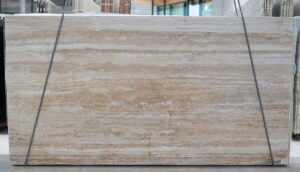
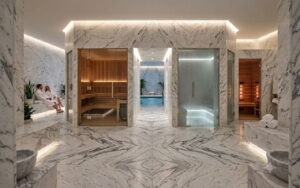
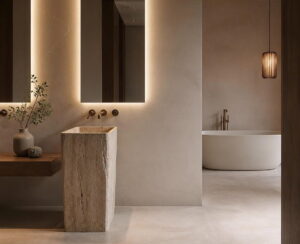
Travertine is one of the most highly regarded natural stones in architecture and interior design, prized for its sophisticated aesthetic. Travertine processing is applied to flooring, cladding, staircases, bathroom installations, facades, and bespoke furnishings.
This material is favored for its versatility and its unique ability to enhance both contemporary and classical environments.
Processing travertine requires a high level of expertise, extreme precision, and a profound understanding of the material’s characteristics, as each slab possesses distinct geological features that influence the final outcome.
What is Travertine?
Travertine is a sedimentary limestone formed over time through the deposition of calcium carbonate.
This natural stone is characterized by its distinct natural porosity, delicate veining, and a warm color palette ranging from white and beige to deep golden or hazelnut tones.
These inherent geological features ensure that every element is unique, imbuing the material with an authentic and natural aesthetic.
Unlike synthetic or engineered materials, travertine lacks a perfectly uniform appearance; however, this variability is considered a prized quality, as it provides visual depth, character, and texture to the surfaces.
Because of these attributes, travertine is highly sought after for premium residential projects, luxury hospitality (hotels), boutique retail spaces, high-end private villas, and upscale contract applications.
Travertine processing procedures
Travertine processing begins with quarry block extraction, followed by secondary processing, which includes block slabbing, material grading, and the selection of finishes tailored to the project’s specific requirements. Every stage is critical, as travertine requires versatile processing methods depending on the desired aesthetic and the intended application.
1. Primary processing: slabbing The initial operation is slabbing. Blocks are sawn into slabs of varying thicknesses using specialized machinery, yielding formats suitable for flooring, cladding, or bespoke decorative elements. Following the sawing stage, the slabs undergo a rigorous quality control process, where they are graded based on chromatic consistency, pore density, veining patterns, and overall uniformity.
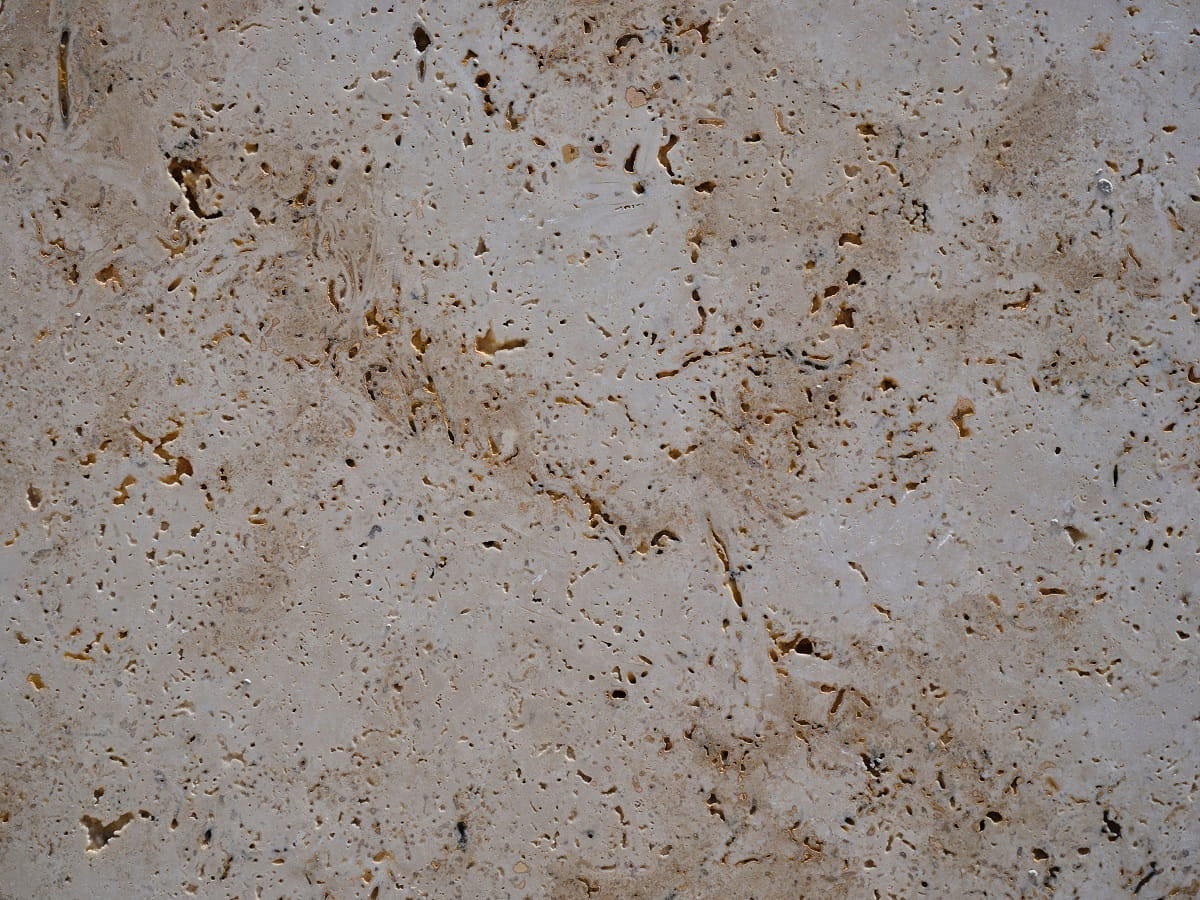
2. Surface treatment: pore filling A pivotal phase in travertine production is pore filling. Due to the material’s inherent vugs (natural cavities), the surface can either be left “open-pore” for a more tactile, rustic aesthetic or filled using resins or cementitious compounds to achieve a smooth, homogeneous, and low-maintenance surface. The choice of finish depends on the desired design style and the functional demands of the final application.
Travertine Finishing Processes
Following the filling phase, the material can be subjected to various finishing treatments. The most common are:
– Honed: provides an elegant, matte appearance.
– Polished: results in a high-gloss, refined surface.
– Brushed: enhances the tactile, natural texture of the stone.
– Sandblasted: creates a coarser, more natural, and non-reflective effect.
– Bush-Hammered: used when a more pronounced, rugged, and slip-resistant surface is required.
– Antiqued or Tumbled: aimed at achieving a warm, “weathered” aesthetic that mimics natural aging.
Travertine is one of the few natural stones characterized by an inherently porous surface structure. This natural porosity is frequently preserved to emphasize the material’s authentic aesthetic appeal. Conversely, the stone may undergo a filling process (stuccatura) to achieve a completely smooth, homogeneous surface.
It is essential to note that the choice of finish impacts not only the aesthetic outcome but also the functional performance of the stone. For exterior applications or wet areas, we recommend a more structured (textured) finish to ensure safety and durability. For refined interior spaces, a honed (levigata) or polished (lucidata) finish is often more appropriate to meet specific design and maintenance requirements.
Main Applications
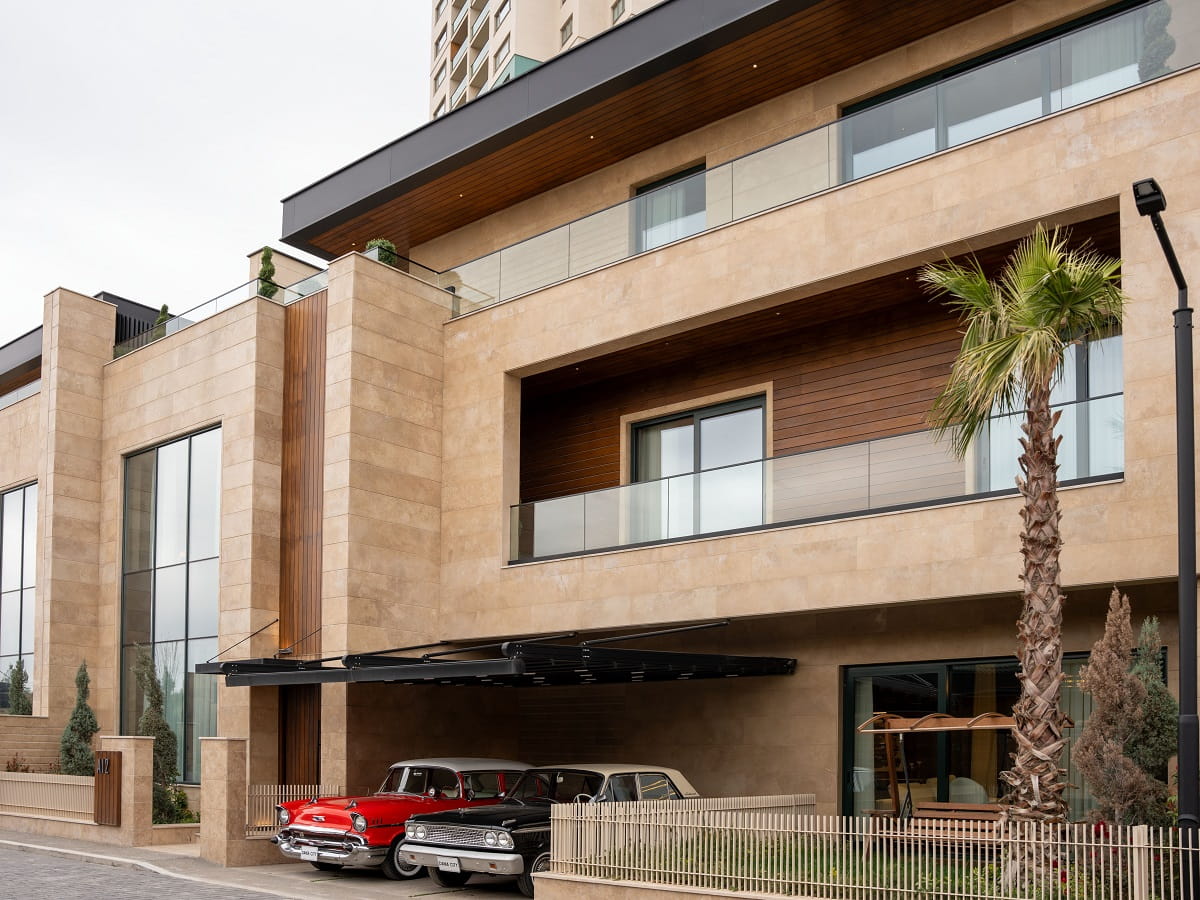
Travertine is widely used in high-end architectural projects due to its ability to adapt to diverse uses. It can be employed for interior flooring, wall cladding, bathrooms, vanity tops, staircases, fireplaces, columns, and exterior facades.
Thanks to its natural elegance, it fits well in both minimalist environments and more classical, decorative spaces. A particularly appreciated aspect is its compatibility with contemporary materials such as glass, metal, wood, and technical surfaces. This allows for the creation of sophisticated contrasts and highly current design solutions.
Difference between marble and travertine
Marble and travertine are often confused, but they are different materials in terms of origin, structure, and aesthetic performance. Marble is a metamorphic rock, born from the transformation of limestone rocks subjected to high heat and pressure.
Travertine, on the other hand, is a sedimentary rock that forms through the deposit of minerals dissolved in water. The most evident difference is visual. Marble generally presents a more compact structure, often with marked veining and a surface that can become very bright after polishing. Travertine, instead, has a more porous texture, with small natural voids and a warmer, more tactile (materic) appearance. From an aesthetic point of view as well, the effect changes greatly.
Marble often communicates refinement, brightness, and monumentality, while travertine transmits a softer, more natural, and Mediterranean sensation. Both are premium materials, but they respond to different design requirements.
Choosing for your project
We recommend choosing between marble or travertine based on the type of environment, the desired style, and the intended use of the stone.
We recommend marble if you want to achieve a highly elegant and dramatic surface. If you are instead seeking a natural stone with a warmer, more authentic, and architectural character, travertine is often the ideal choice. Its processing methods allow for the customization of the final result, making it suitable for high-profile residential and contract projects.
Furthermore, the ability to choose between different finishes offers great creative freedom to designers, architects, and interior designers.
Want to receive more information on the topic of “travertine workmanship”?
Call us on our landline +39 0431 624553 or send your request to the email info@venetiangoldluxury.com to request your free consultation.
Also follow us on our Instagram page to stay updated on our latest creations and news.