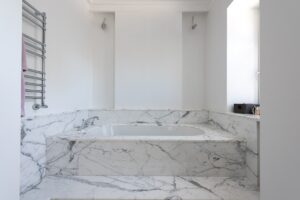
Granite processing: characteristics, finishes, and applications
Granite is one of the most highly regarded natural stones in architecture and interior design due to its exceptional resistance, durability, and elegance. Granite processing requires specific expertise, as it is a hard, compact, and low-porosity stone capable of delivering excellent results from both a functional and visual perspective.
Utilized in residential, commercial, and contract projects, this material combines high technical performance with a solid, contemporary, and high-value aesthetic.
What is Granite
Granite is an intrusive igneous rock composed primarily of quartz, feldspar, and mica.
Its crystalline structure gives it remarkable compactness and superior resistance compared to many other natural stones.
Precisely due to this characteristic, it is considered an ideal material for surfaces subject to heavy use, impact, abrasion, and atmospheric agents.
From an aesthetic standpoint, granite offers a wide variety of colors and grain sizes. It can appear uniform or more dynamic, with visible granules and shades ranging from white to gray, black to red, and even more unique tones.
How granite is processed
Granite processing begins with quarry block extraction and continues with sawing into slabs or specific formats, depending on the project.
Compared to other stones, granite requires high-resistance tools and machinery because its hardness makes it more challenging to work with.
After cutting, the material is selected and classified based on hue, compactness, the presence of any inclusions, and aesthetic quality.
This phase is fundamental because granite is often chosen not only for its performance but also for the chromatic harmony required in the final space.
The main finishes for granite include:
– Polished, to obtain a brilliant, elegant surface that enhances chromatic details;
– Honed, for a more understated and contemporary effect;
– Flamed, to render the surface non-slip and more tactile;
– Bush-hammered, useful for exteriors and surfaces with a strong character;
– Brushed, for a softer, weathered result;
Sandblasted, recommended when a more matte and technical texture is desired.
Depending on the final use, granite can also be cut to size, beveled, milled, or processed to obtain complex elements such as countertops, stairs, thresholds, ventilated facades, integrated sinks, and customized architectural components.
Why Choose Granite
Granite is often selected when a project requires a reliable, resistant material that is not prone to wear.
Its hardness makes it suitable for environments with heavy foot traffic or where the surface must maintain its original appearance over time.
Furthermore, granite’s low porosity generally makes it more tolerant of stains, humidity, and external agents, especially if properly treated. These qualities make it particularly interesting for those seeking a natural stone that balances aesthetics and performance. Granite is not merely a technical material: in its most refined finishes, it also conveys an image of solidity, prestige, and contemporaneity.
Preferred applications compared to marble
Granite and marble are both noble materials, but they do not address the same design requirements.
In many applications, granite is preferable to marble precisely because of its mechanical properties and greater resistance.
Granite is often the best choice for:
– Kitchen countertops, due to resistance to heat, scratches, and daily use;
– High-traffic floors, such as entrances, halls, commercial spaces, and public environments;
– Internal and external stairs, where robustness and durability are required;
– Exterior cladding, due to its resistance to atmospheric agents;
– Windowsills, thresholds, and copings, because it maintains shape and stability over time;
– Functional or contract bathrooms, where intensive use requires materials that are not delicate;
– Architectural elements subject to high stress.
Compared to marble, granite tends to be less sensitive to scratches, impacts, and wear. This makes it better suited for practical and intensely used environments, whereas marble is often preferred for more decorative or scenic contexts, where aesthetic effect and surface brightness prevail.
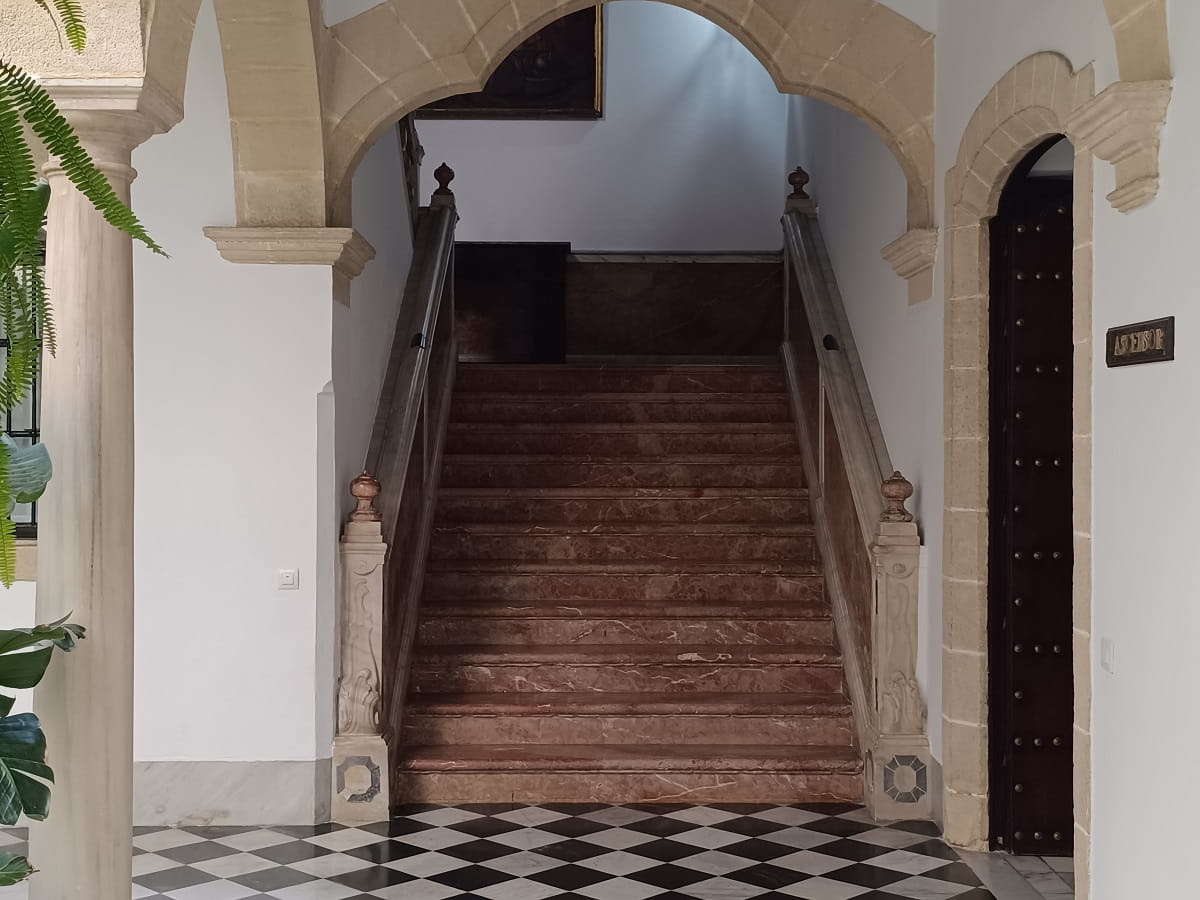
Granite or Marble: design differences
The choice between granite and marble depends on the desired result. Marble is prized for its elegant veining, brightness, and strong visual impact, but it is generally more delicate and requires greater attention in daily use. Granite, conversely, offers a more essential and robust aesthetic, with higher technical performance. In summary, marble is often ideal when the project focuses on refinement, exclusivity, and decorative prestige.
Granite is preferable when resistance, practicality, and continuity of use are required. For this reason, in contexts where the surface must last a long time and maintain high performance, granite represents a very effective solution.
The best finishes for different contexts
One of granite’s strengths is the variety of available finishes, which allows it to be adapted to many design needs. A polished surface is perfect for elegant and representative interiors. A flamed or bush-hammered finish, on the other hand, is more suitable for outdoor spaces or areas where increasing grip is important. For example, in a high-end residential project, granite can be used in kitchens and bathrooms to obtain resistant and easy-to-manage surfaces.
In a commercial or hospitality project, it can be used for flooring and cladding capable of sustaining intensive use without losing aesthetic quality. Finally, in outdoor settings, its resistance to frost, rain, and thermal shock makes it a particularly reliable choice.
Trust Venetian Gold for your granite processing
Granite processing enhances a natural material that combines strength, elegance, and reliability.
From the quarry to the final finish, each processing stage contributes to transforming this stone into a high-performance solution suitable for projects where durability and quality are fundamental. Compared to marble, granite is often preferable in all those applications where resistance is a priority requirement, without sacrificing a refined and professional aesthetic.
For architects, designers, and clients seeking a material capable of combining functionality and prestige, granite remains a high-value choice, especially in the most demanding contexts and for surfaces destined to last over time.
Trust Venetian Gold for your granite work.
Want to learn more about granite workmanship?
Call us on our landline +39 0431 624553 or send your request to the email info@venetiangoldluxury.com to request your free consultation.
Also follow us on our Instagram page to stay updated on our latest creations and news.